Free AI for All: Democratizing AI Literacy in STEM
A CUHK educational ecosystem combining equitable AI access, multimodal chat, tool-using AI, computer-using agents and human-reviewed assessment.
Free AI for All is a non-commercial, grant-funded educational initiative led by the Department of Physics at The Chinese University of Hong Kong. Since 2024, it has grown alongside artificial intelligence itself: from multimodal conversation, to AI that uses tools, to agents that operate a computer, and now to an early-stage grading and feedback prototype.
The aim is not to produce faster answers. It is to help students, teachers and teaching assistants become more capable users of AI: able to ask better questions, inspect outputs, verify text, images, calculations and code, disclose AI use appropriately, supervise agent actions, and decide when AI should not be used.
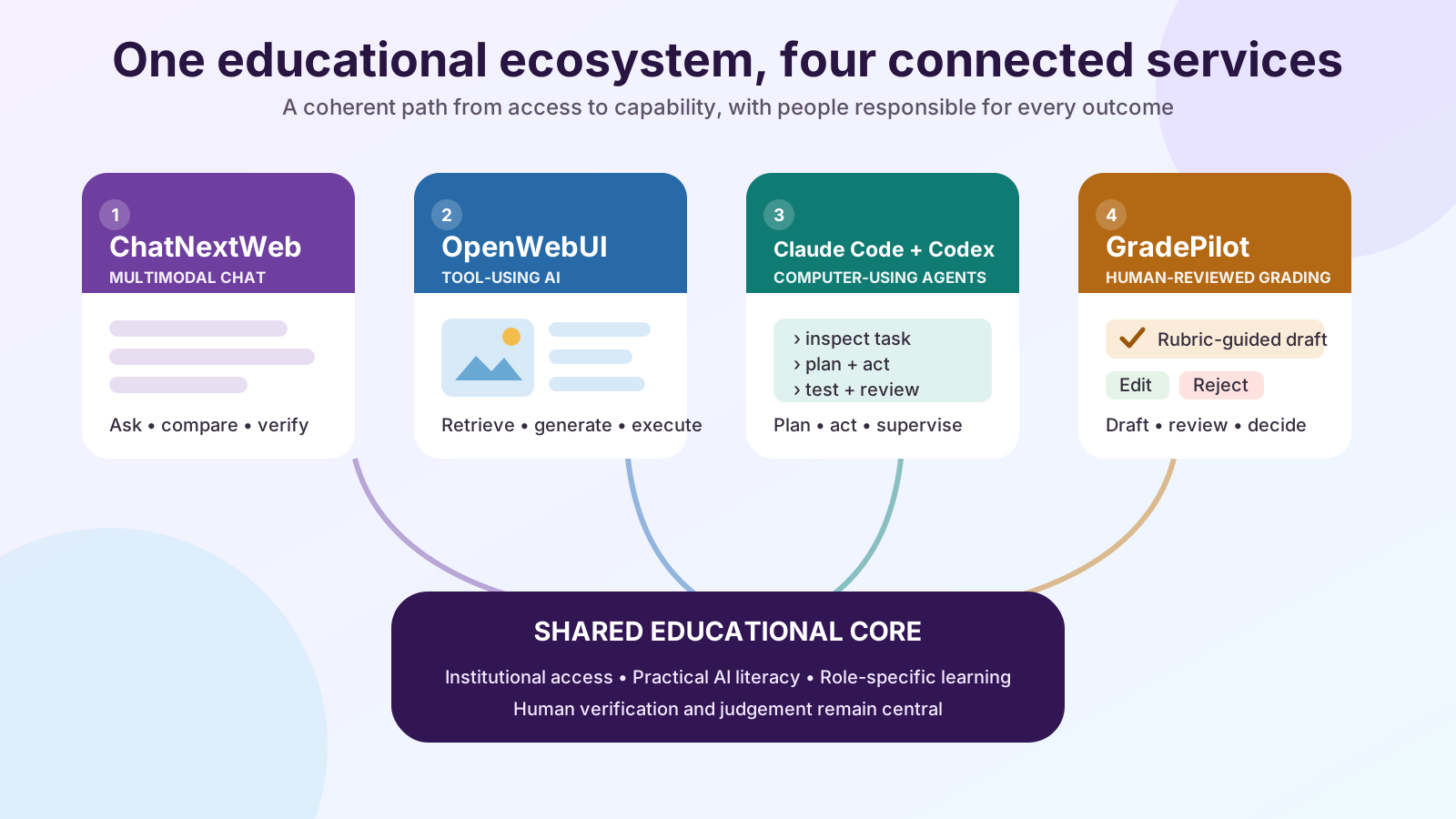
The same institutional credentials open a connected progression of services, while practical AI literacy and human judgement remain the shared educational core.
The connected platform in practice
The following images show the working interfaces without publishing login details or private student records. The ChatNextWeb screenshot was updated on 7 October 2026; the other images were captured from the supplied demonstration accounts on 14 July 2026.
1. ChatNextWeb: multimodal chat
ChatNextWeb provides fast conversation with multiple capable models across text and images. It is the simplest entry point for comparing answers, refining questions and learning to verify what a model produces.
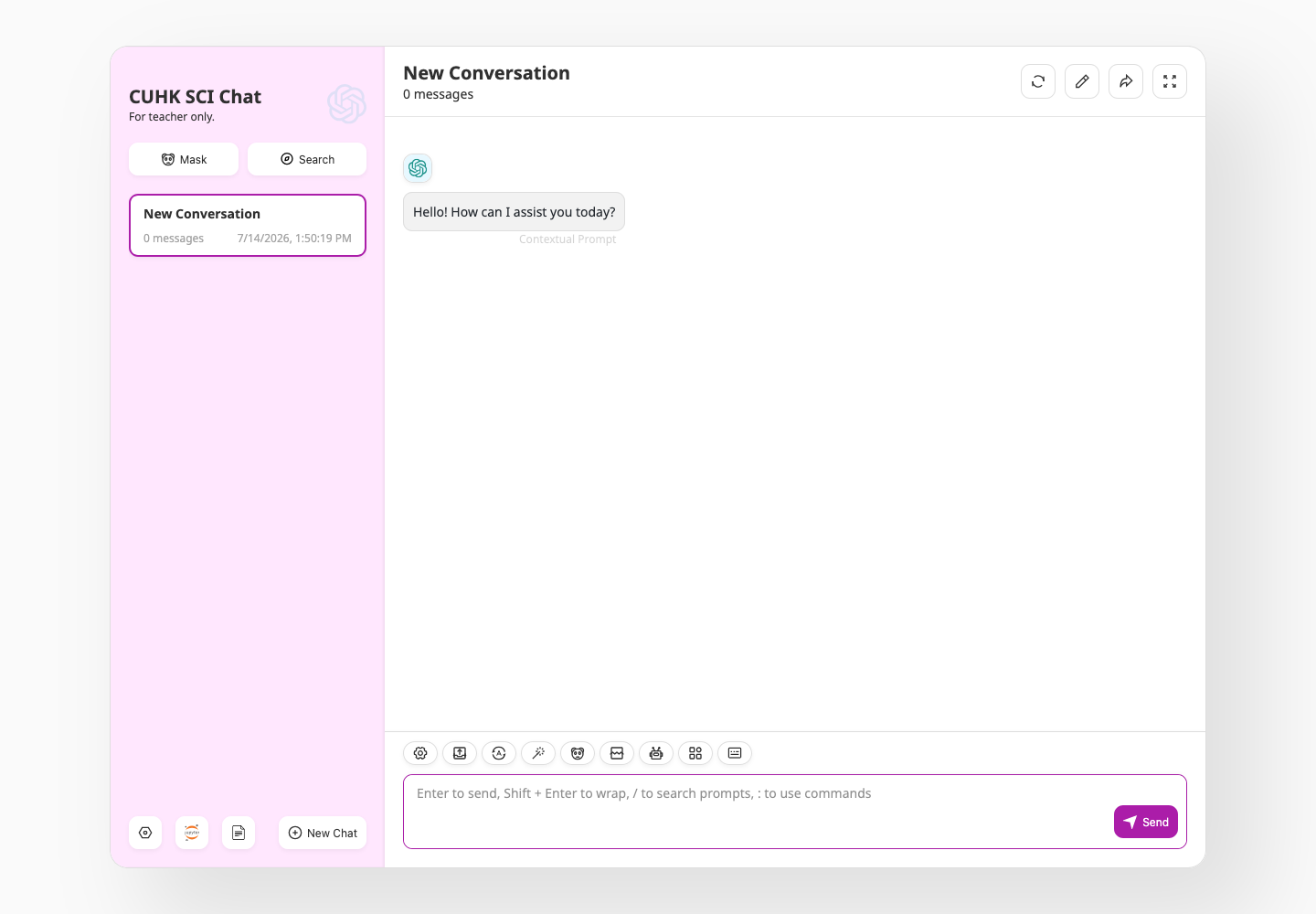
A teacher demonstration view of ChatNextWeb displaying an image within a conversation, illustrating its multimodal functionality. The controls around the message box support model choice, image input, prompts and other guided chat functions.
2. OpenWebUI: AI that uses tools
OpenWebUI adds mature tool use: retrieval over documents, image generation and editing, web-assisted work and in-browser code execution. The customised service also meters each student’s spend and applies a weekly budget cap, supporting equitable access and cost-aware model choice.
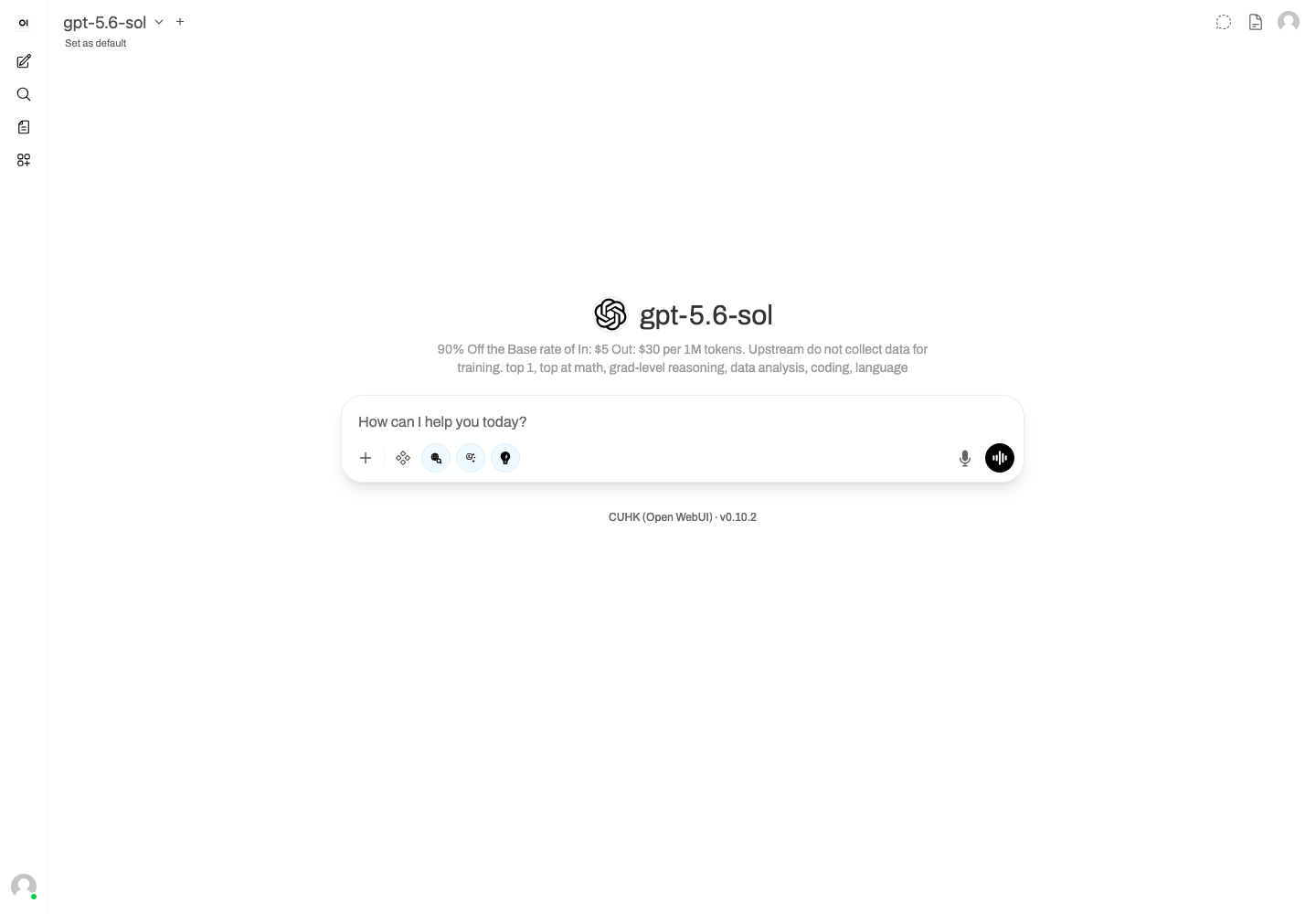
The working OpenWebUI interface exposes model choice and tool controls in one place, so outputs can be inspected rather than treated as a black box.
3. Claude Code and Codex: computer-using agents
Claude Code and Codex extend the progression from assistants that answer to agents that plan and carry out multi-step work under human supervision. Students and educators can inspect the workspace, review changes, run tests and remain responsible for the result.
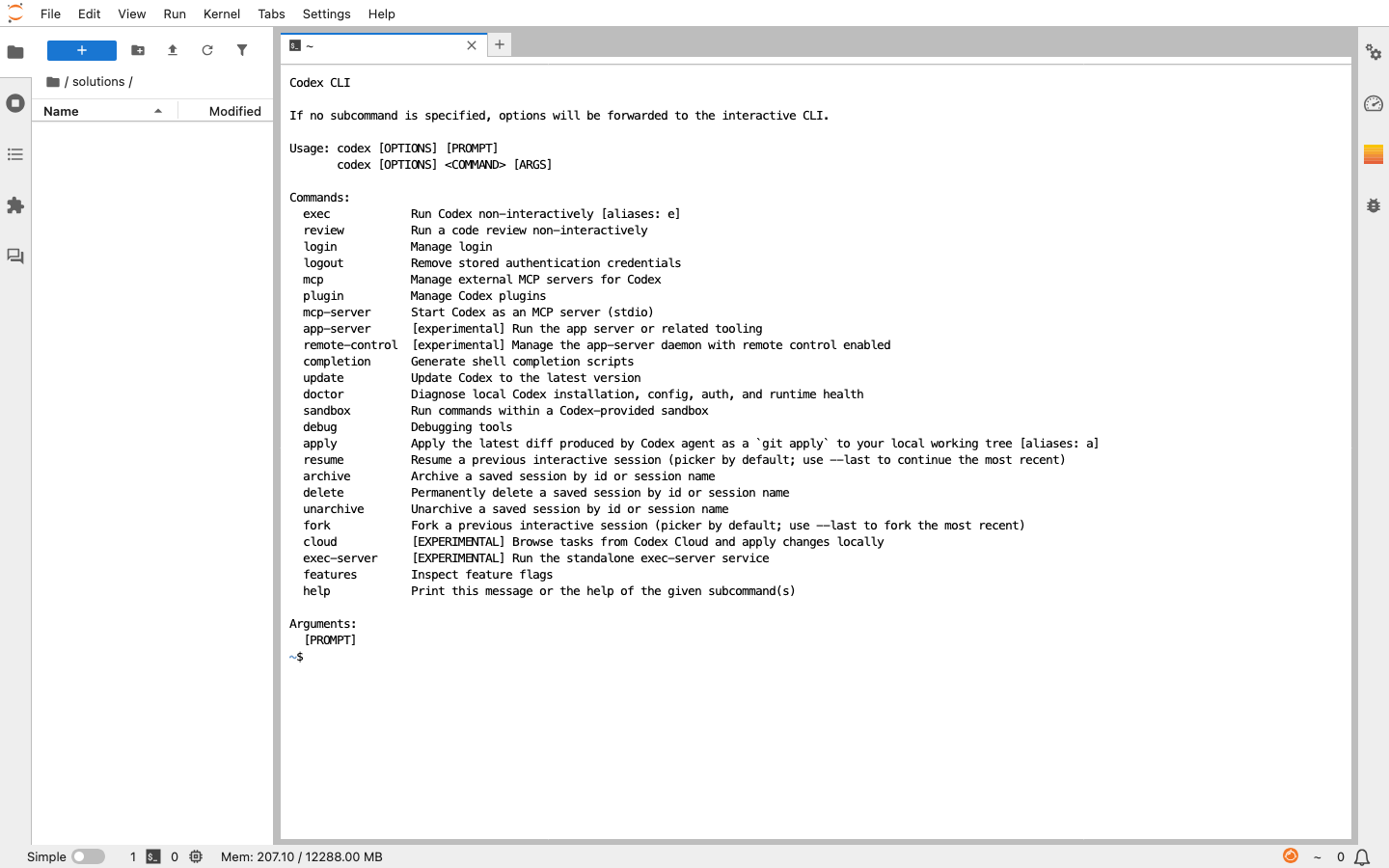
The demonstration workspace shows Codex available inside JupyterLab. Only the help screen was run for this capture; no model task or student work was submitted.
4. GradePilot: AI assistance with human decisions
GradePilot is a working early-stage prototype for assignment submission, grading and feedback. Its staff workflow can prefill rubric-guided scores and feedback for instructor or TA review, but it does not make or submit the official grading decision. A human reviewer can edit or reject the draft and retains every final decision.
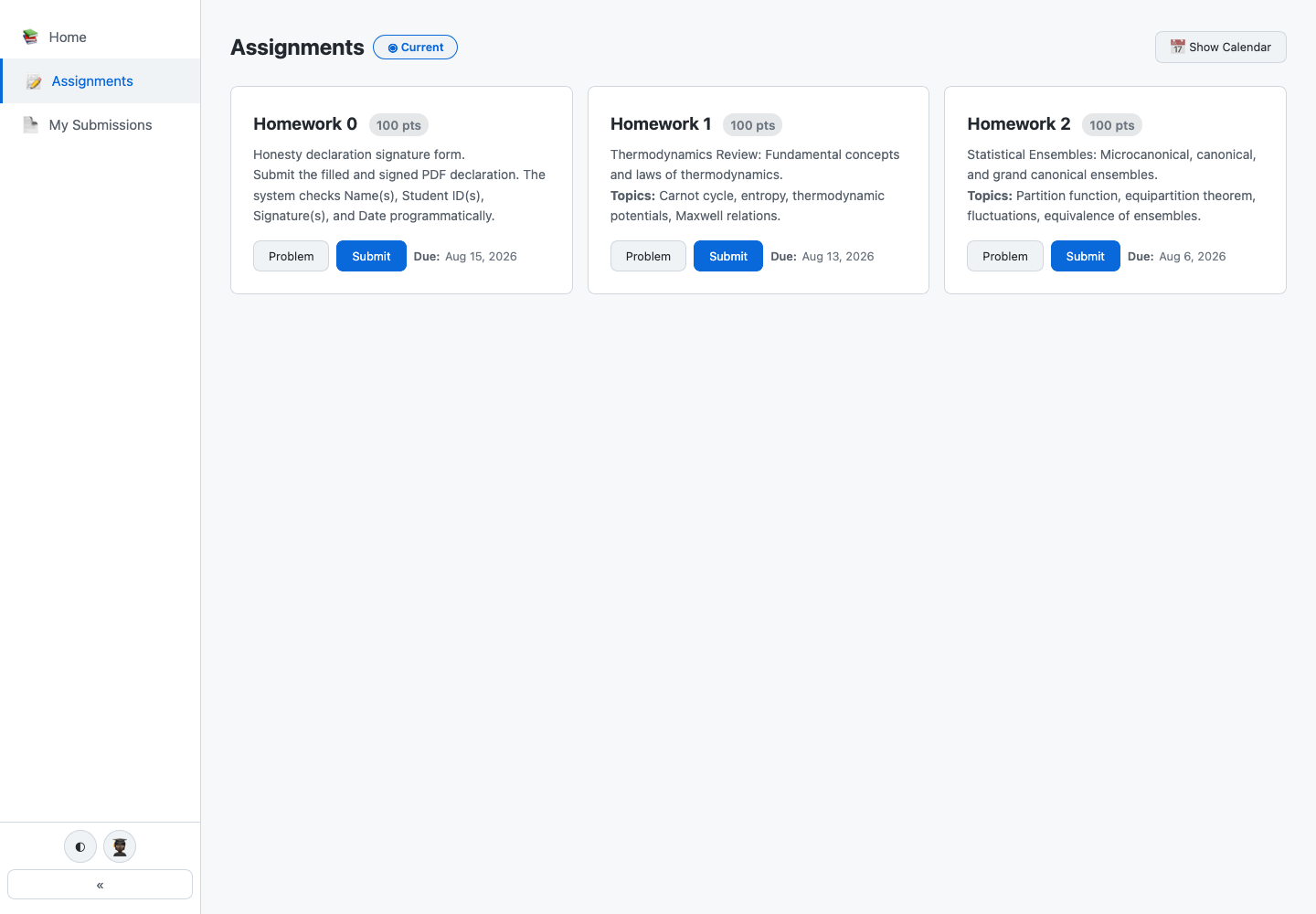
The supplied account is student-role, so this image documents the assignment and submission side of the prototype rather than the role-restricted staff grading queue.
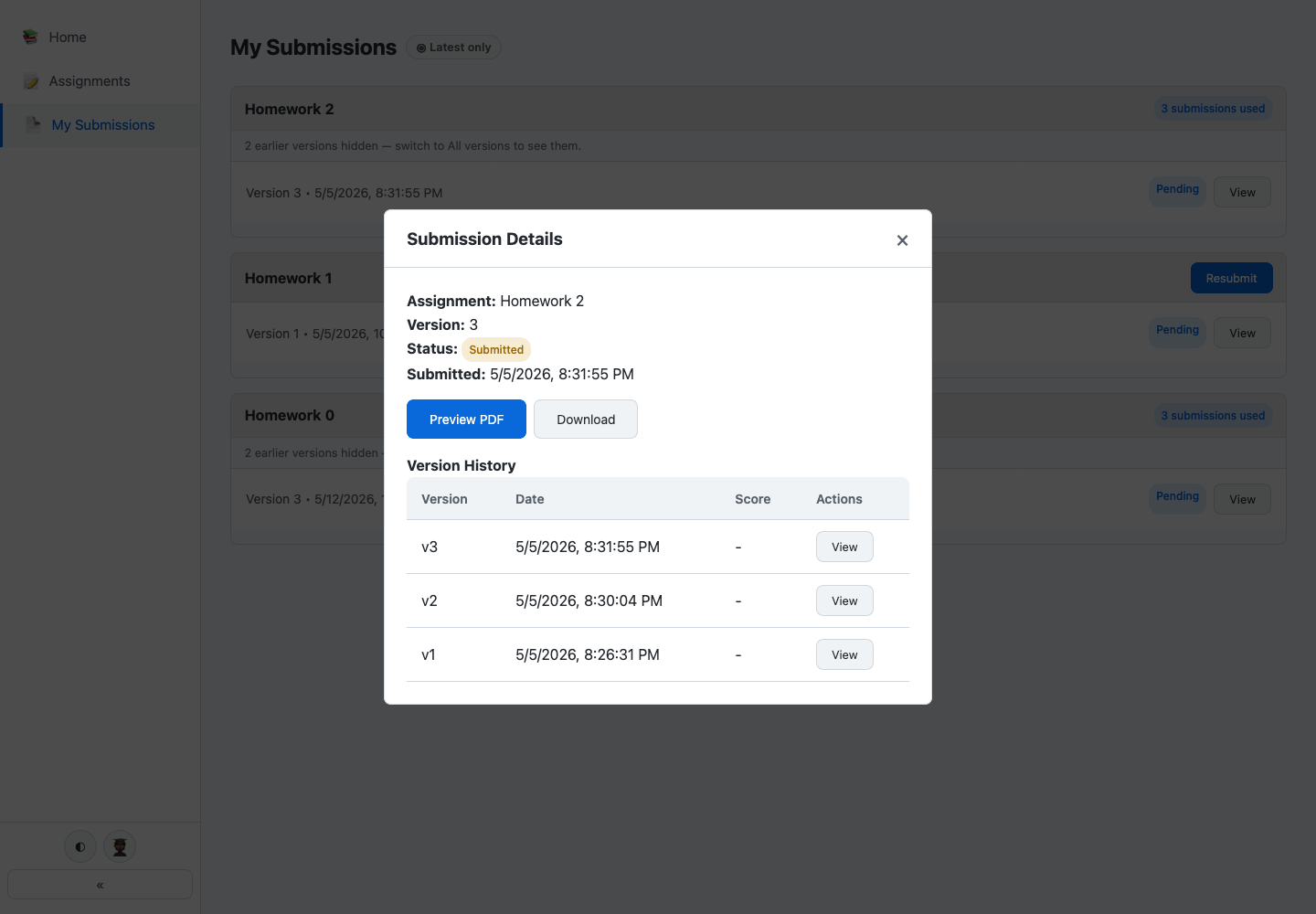
Version history makes iterative work visible. The demonstration submissions remain pending, so no grade or private feedback is exposed.
What is original
The external foundation models are not presented as the project’s invention. The original contribution is the coherent educational design around them: free shared access, a connected progression of current AI capabilities, distinct student, teacher and TA workflows, practical AI literacy, institutional cost control and a continuing evidence loop.
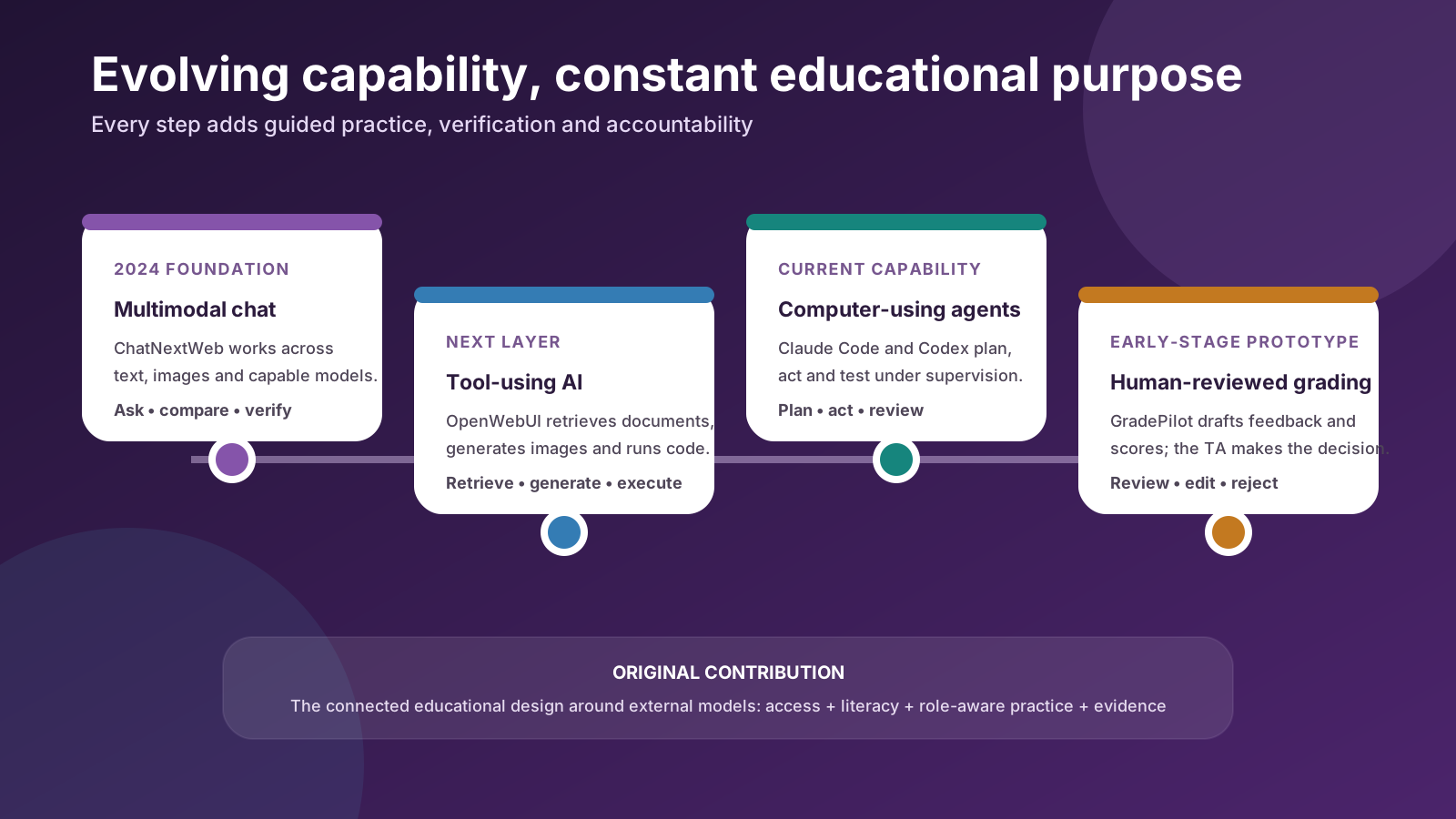
Access alone does not democratize education. Free access without literacy can spread error, while literacy without equitable access leaves the best tools to those who can pay. Free AI for All joins both: shared access and repeated practice in questioning, checking, supervising and taking responsibility.
AI literacy for every role
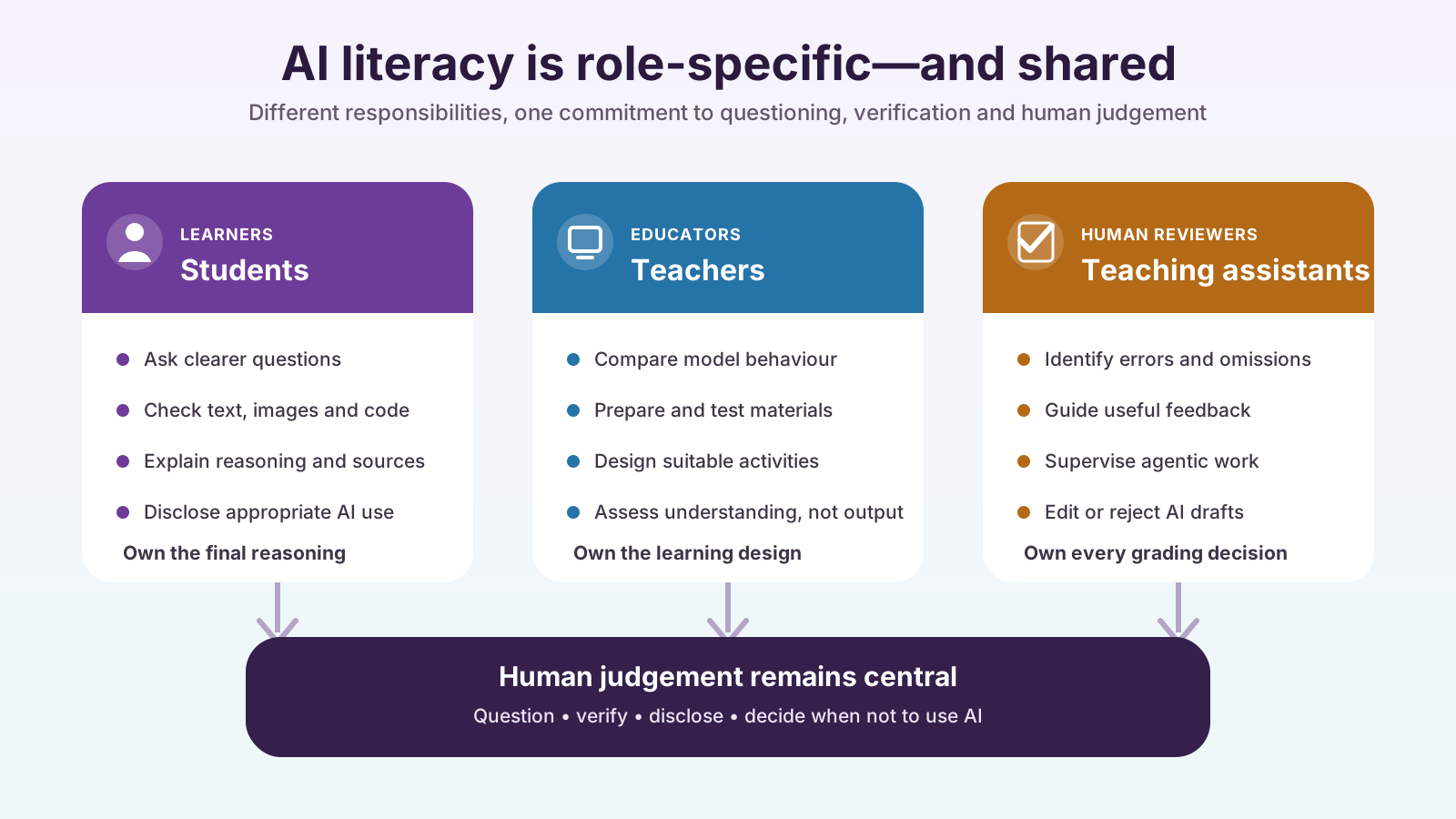
Students move from multimodal chat to documents, images and agentic tasks while learning to explain and verify outputs. Teachers compare models, prepare materials, test course questions and decide which capability fits each learning outcome. Teaching assistants learn to identify errors, guide useful feedback, supervise agent steps and review GradePilot drafts without surrendering academic judgement.
Measured engagement and learning evidence
Direct platform records show 400 active users across at least ten Physics and Statistics courses, about 100 daily active users, 158 billion tokens served and more than 100 written feedback responses. Counts across activities can overlap and are not summed as unique beneficiaries.
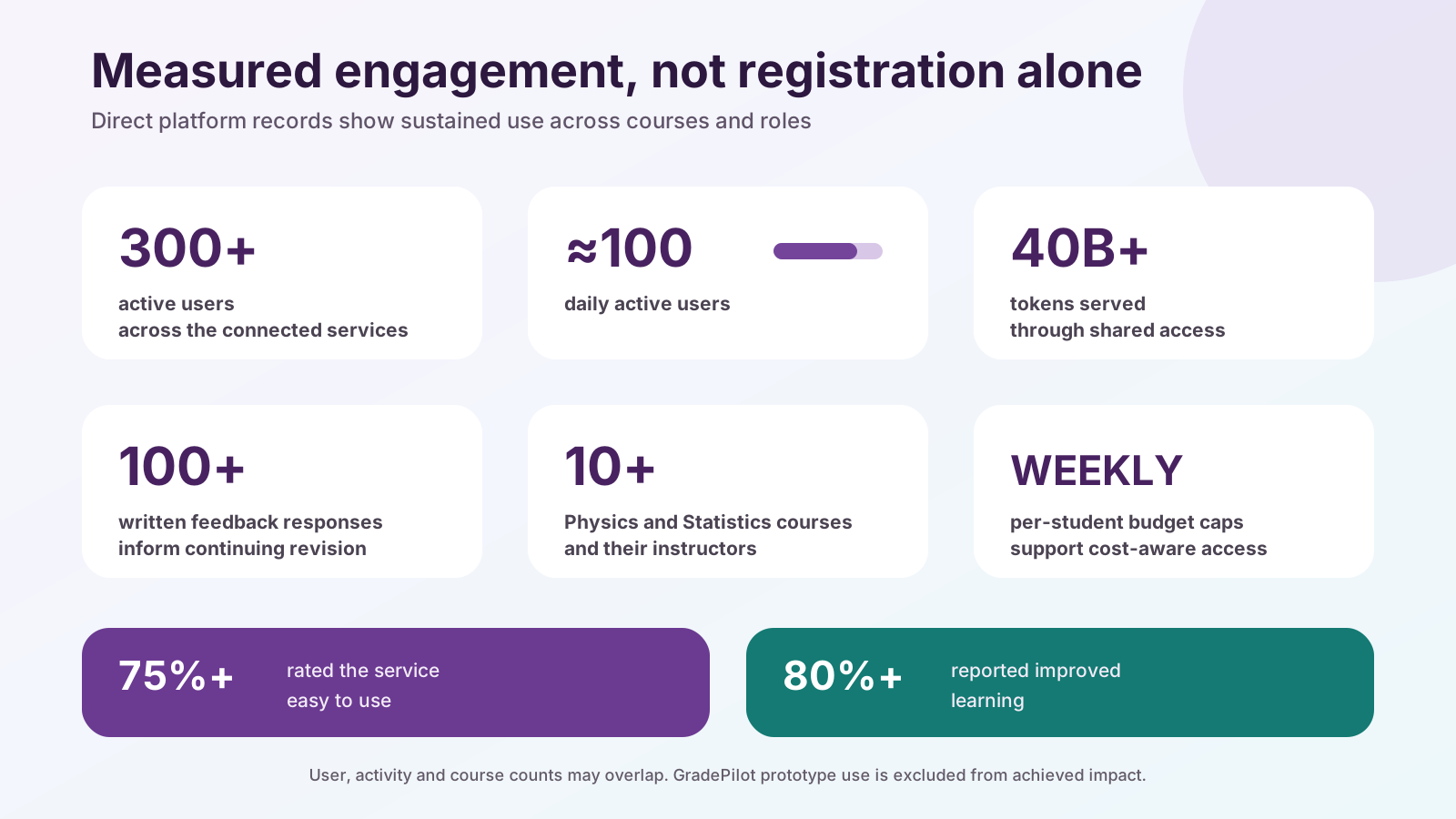
In the 2024-25 survey, more than 75% of respondents rated the service easy to use and more than 80% reported improved learning. These measures guide further testing; they are not treated as proof that every new AI capability automatically improves education. GradePilot’s early prototype use is evaluated separately and is excluded from achieved-impact figures.
Human-centred evaluation and improvement
The project evaluates each service on representative educational tasks. It asks whether students can explain and verify outputs, teachers can choose suitable tools and design appropriate activities, and TAs can identify errors, supervise agent work and retain judgement when reviewing AI-assisted drafts.
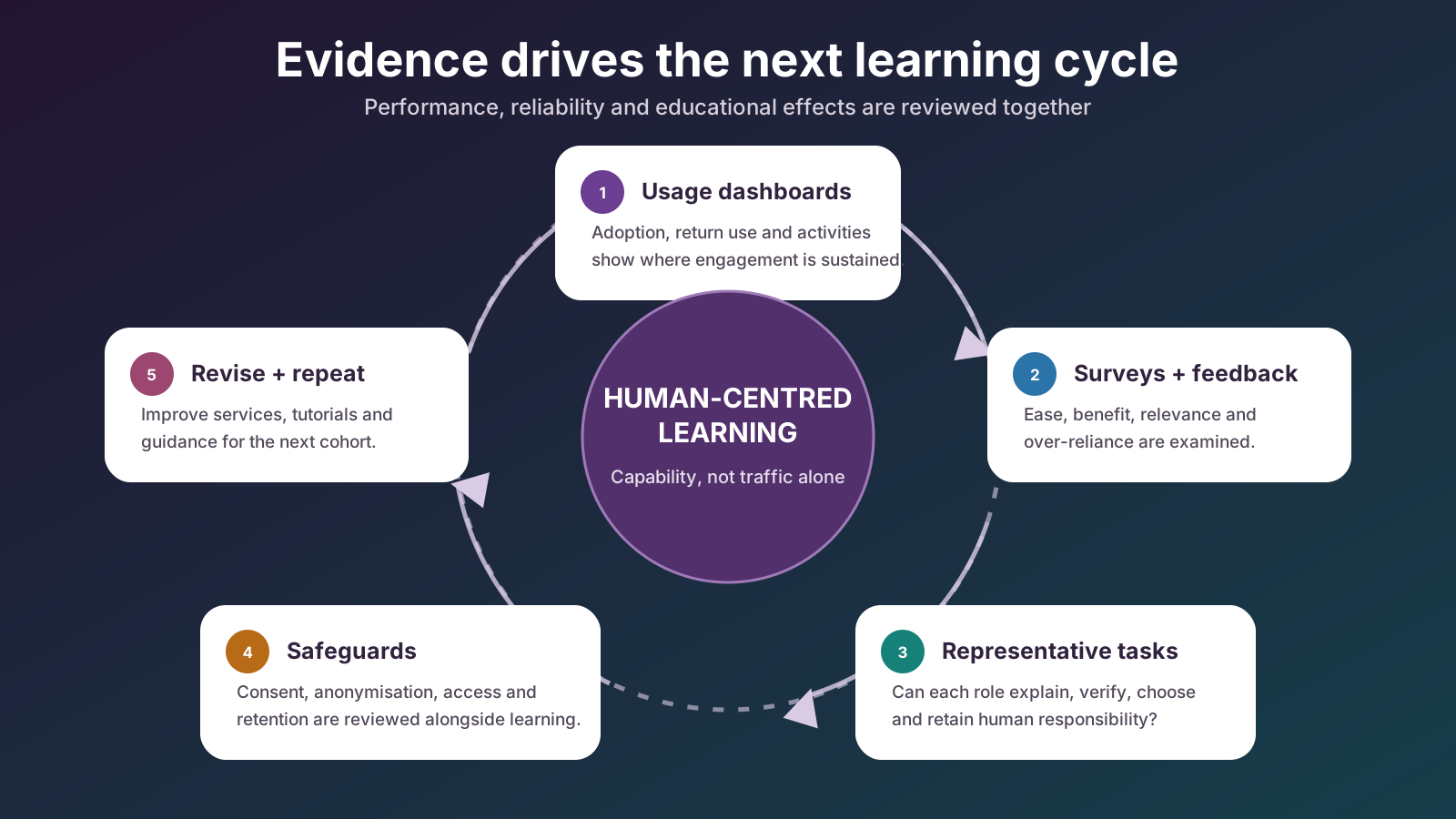
Usage dashboards track adoption, return use, activities and cost. Surveys and open feedback examine ease of use, learning benefit, course relevance and over-reliance. Consent, anonymisation, restricted access and retention are reviewed alongside educational effects. Findings are used to revise services, tutorials and classroom guidance for the next cohort.
Deepening impact
The project’s selected pathway is Depth: strengthening educational quality, engagement and responsible use within its present context rather than treating expansion alone as success.
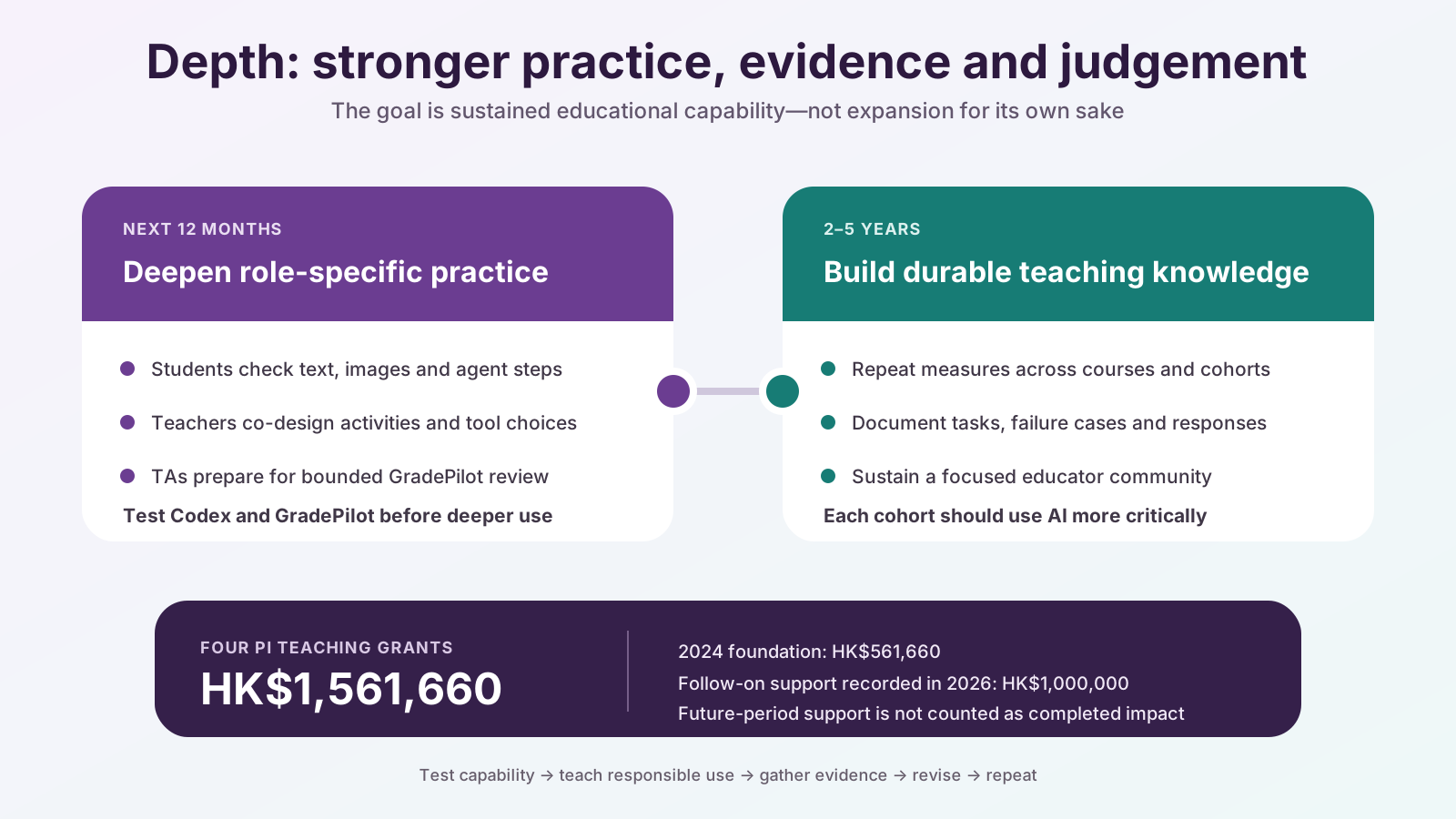
Over the next 12 months, students will practise checking multimodal chat, tool-using outputs and agent steps; teachers will co-design activities; and TAs will prepare for carefully bounded GradePilot review. Claude Code, Codex and GradePilot will be tested before deeper classroom use. Over two to five years, repeated courses will build longitudinal evidence and a reviewed library of tasks, failure cases and teaching responses.
Four CUHK/UGC teaching-development grants provide HK$1,561,660 in programme support. The 2024 foundation comprised Free Generative AI for All (TDLEG 4171166, HK$461,660) and an embedded-notebook AI grant (CDGS 4171173, HK$100,000). Two follow-on grants add HK$1,000,000 for 2025-28 and 2026-27 work. Future-period support is distinguished from completed impact.
Project team
The initiative is led by Prof. Yangqian Yan, Department of Physics, CUHK, with a Physics-Statistics team of co-supervisors, teachers, TAs and student helpers. The development cycle remains deliberately simple: test each capability, teach responsible use, gather evidence, revise, and repeat with the next cohort.
Public contact: yqyan@cuhk.edu.hk