Free AI for All: Depth Evidence
Roadmap, responsible-use safeguards, governance and sustained support for the selected Depth pathway.
Evidence hub · Innovation · Impact · Depth
Selected pathway: Depth
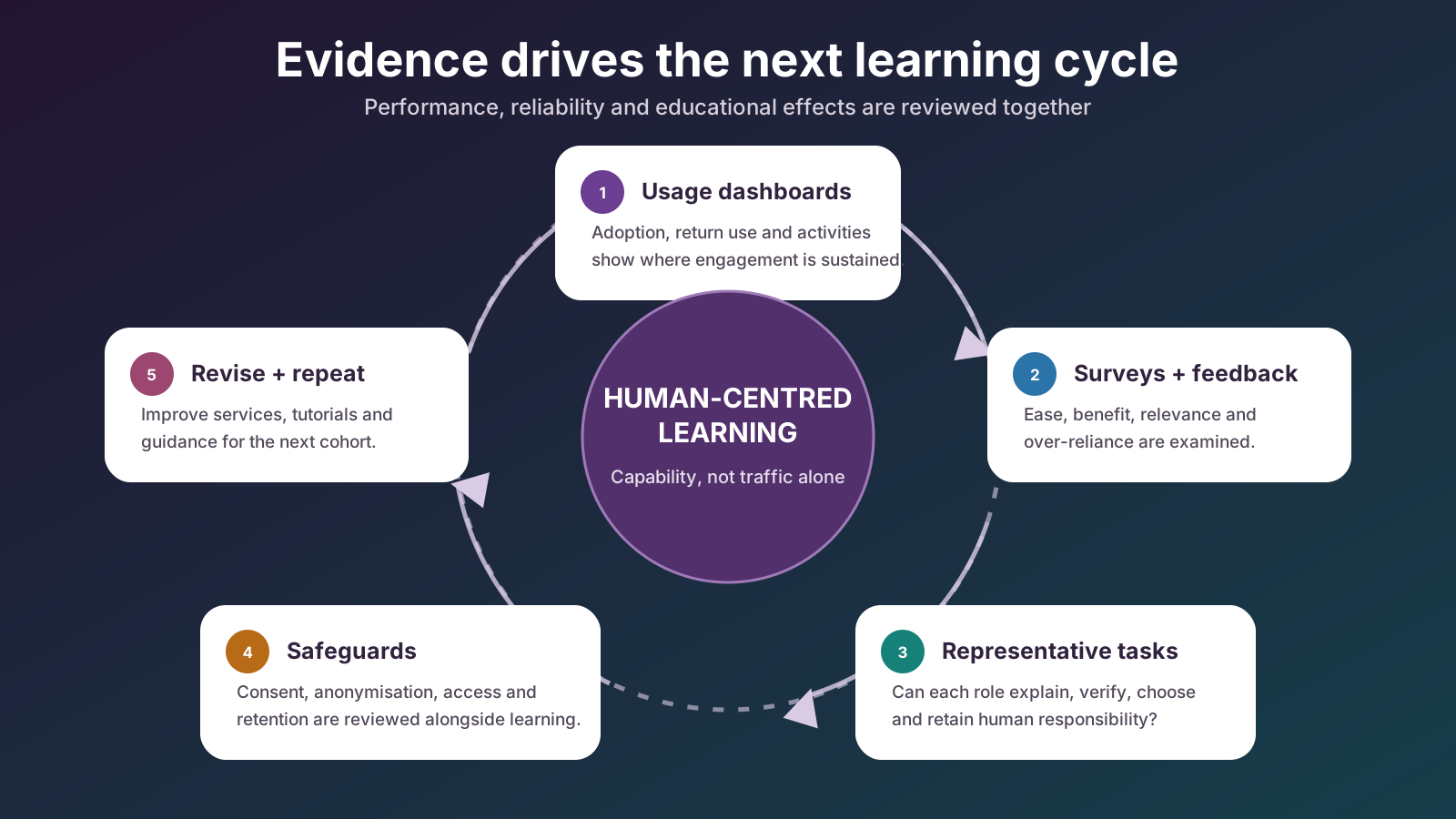
The project is strengthening educational quality, engagement and responsible use within its current context rather than treating expansion alone as success. Its development cycle is deliberately continuous: test each capability, teach responsible use, gather evidence, revise and repeat with the next cohort.
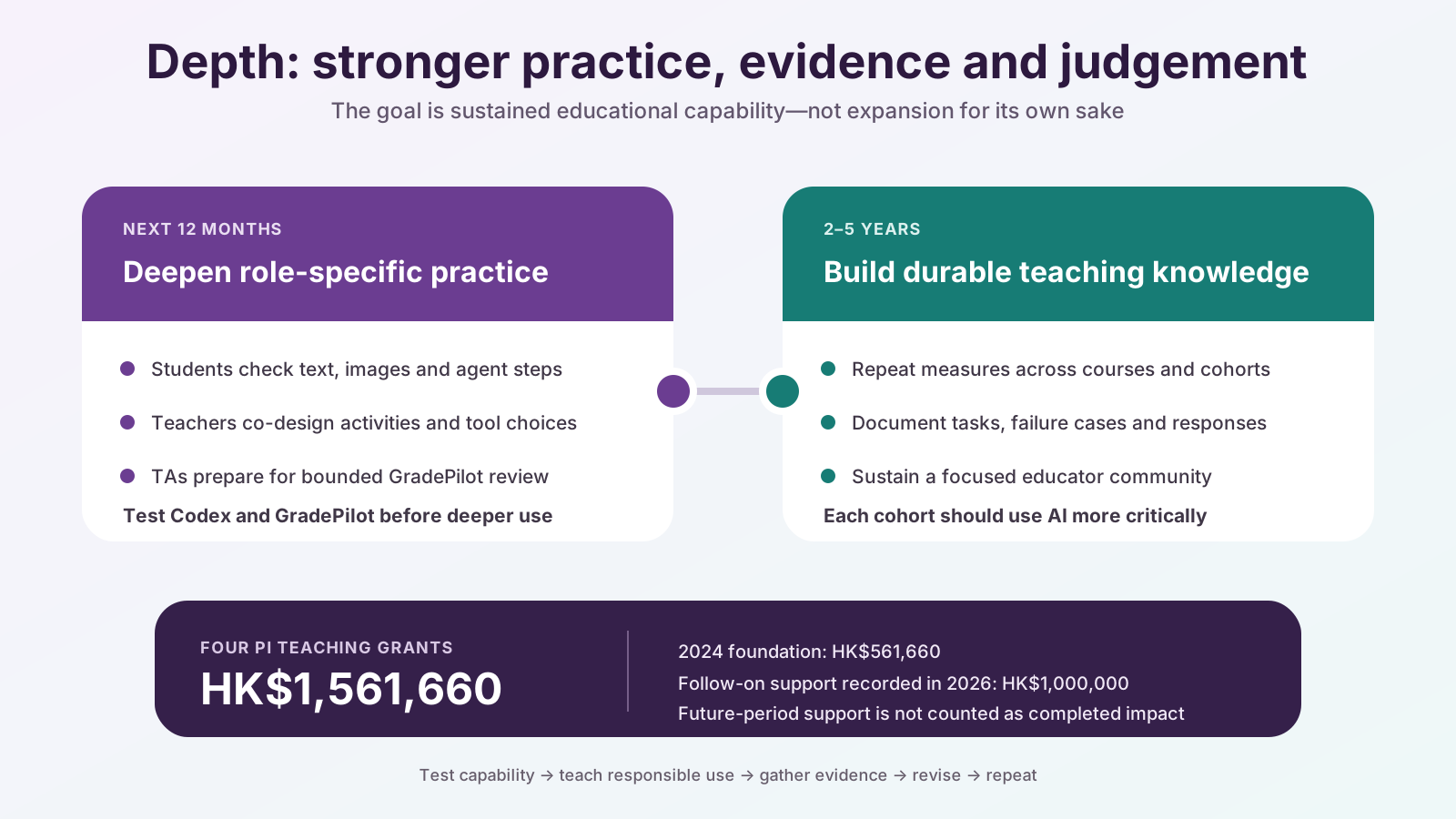
The next 12 months
Three follow-on grants support deeper role-specific AI literacy across the connected ecosystem:
- Students will practise checking multimodal conversations in ChatNextWeb, tool-using outputs in OpenWebUI and agent steps in Claude Code and Codex.
- Teachers will co-design activities and decide which capability supports each learning outcome.
- Teaching assistants will prepare for bounded GradePilot review through demonstrations, rubrics and feedback practice, with explicit limits on AI authority.
- Agent workflows and GradePilot will be tested before deeper classroom use.
The next 2–5 years
Repeated courses will provide longitudinal evidence on understanding, confidence and responsible use. The team will build a reviewed library of educational tasks, failure cases and teaching responses. CUHK educators, professors from other universities and secondary-school teachers will continue as a focused community of practice. Success means that each cohort and teaching team uses evolving AI more critically, transparently and educationally than the one before it.
Responsible, transparent and human-centred use
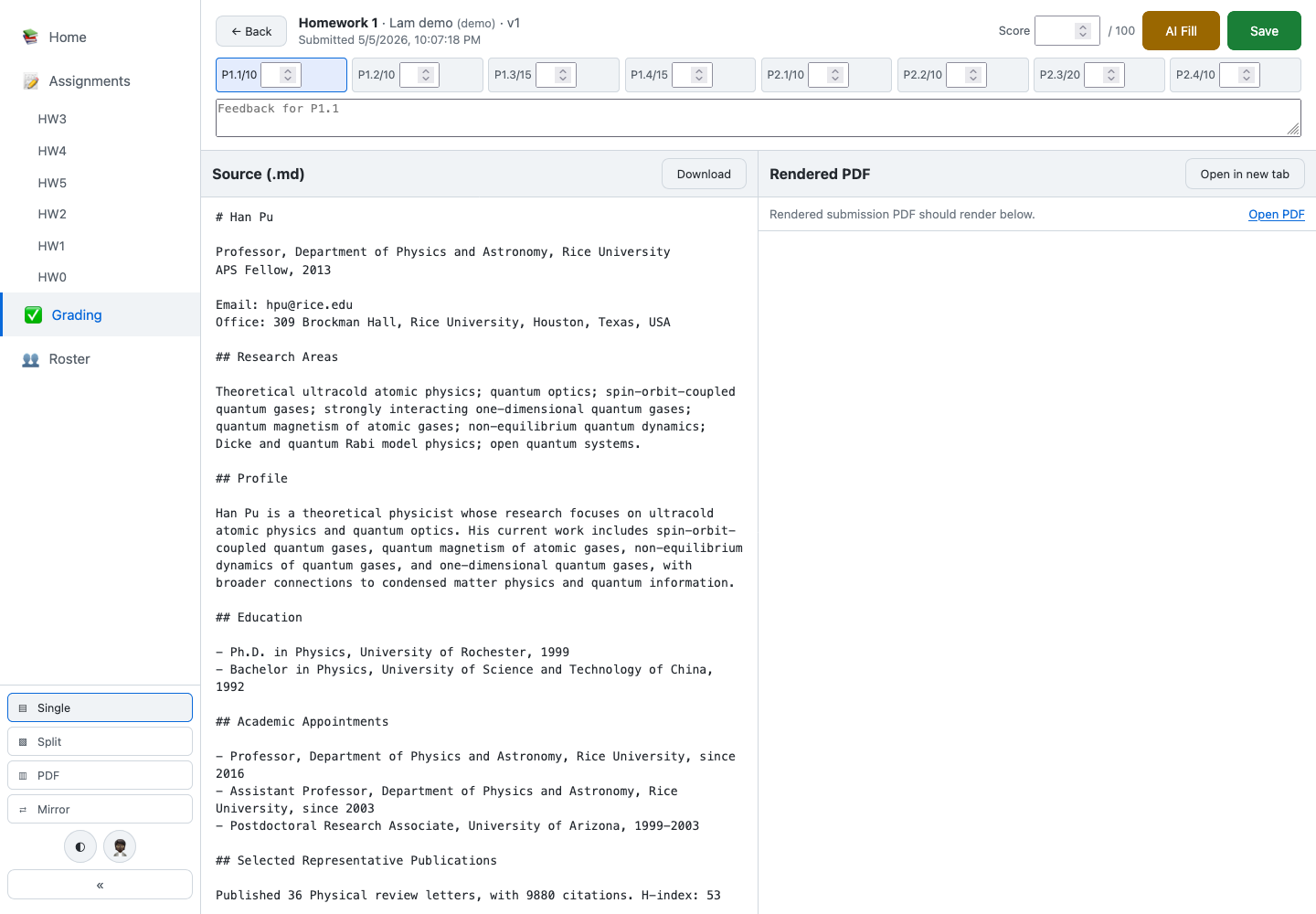
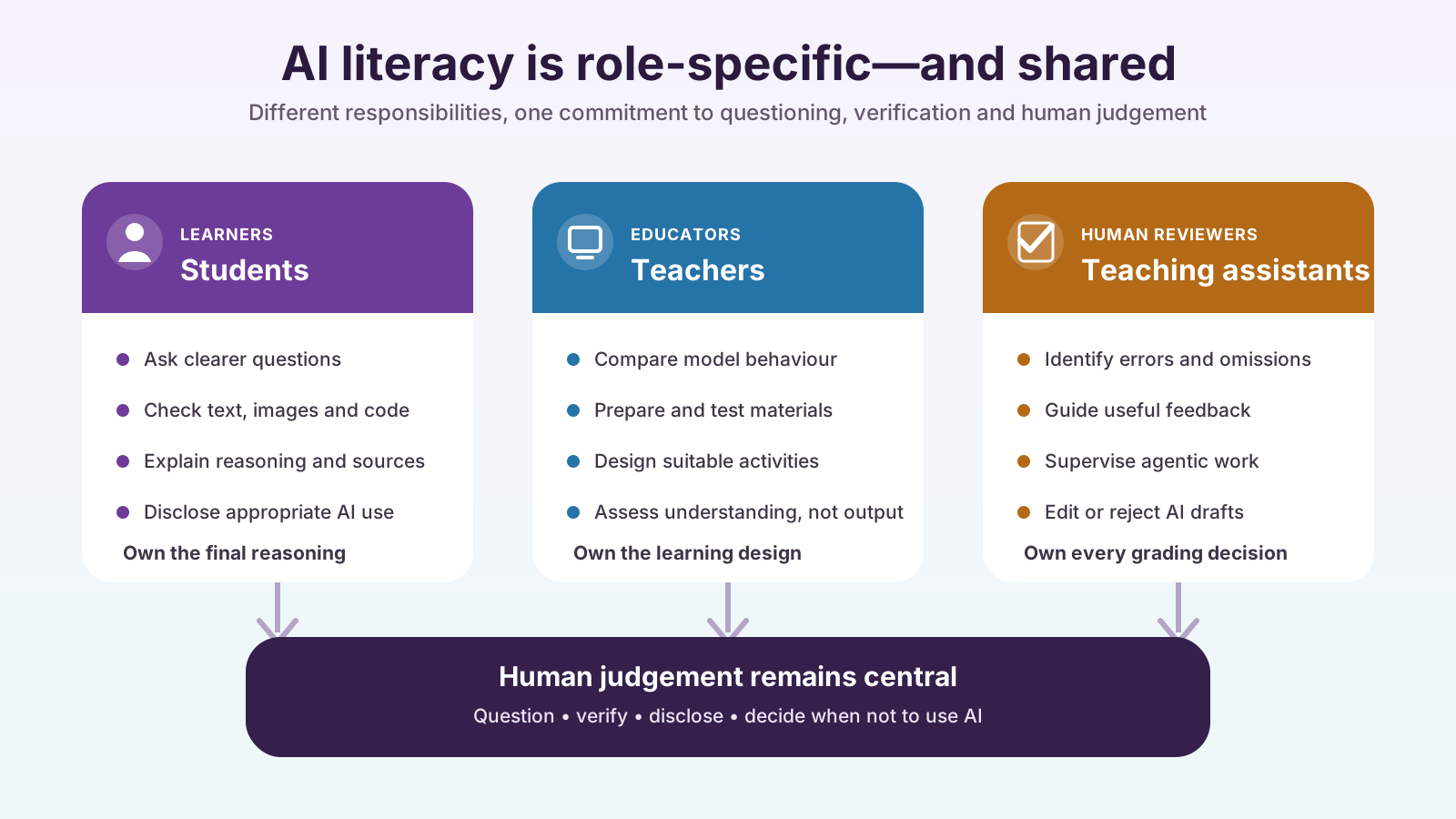
Human judgement remains central at every stage. Students are taught that text, images, calculations, code and agent actions can be wrong and must be verified. Teachers decide whether and how AI fits an activity and assess understanding rather than unexamined output. Agent-generated changes remain subject to human review. Teaching assistants may use GradePilot’s optional AI Fill action for a draft, but can edit or reject it and retain every final grading decision.
Transparency is supported through visible model choices, inspectable tool traces, logged use for evaluation and tutorials on disclosure, limitations and appropriate use. Data safeguards include informed consent, anonymisation for analysis, restricted access and limited retention, with additional review for sensitive contexts. Free access addresses economic inequity; role-specific AI literacy addresses capability inequity.
Resources, expertise and sustained support
Five CUHK/UGC teaching-development grants provide up to HK$1,801,660 in programme support:
| Programme support | Period | Amount |
|---|---|---|
| Free Generative AI for All (TDLEG 4171166) | 2024 foundation | HK$461,660 |
| Embedded-notebook AI grant (CDGS 4171173) | 2024 foundation | HK$100,000 |
| Free AI Tools for All | 2025–28 follow-on | HK$700,000 |
| Vibe Coding for STEM | 2026–27 follow-on | HK$300,000 |
| AI-Assisted Formative Feedback and Grading System co-Developed and Benchmarked by Postgraduate Students | 2025–28; approval-in-principle | Up to HK$240,000 |
The newest grant is approved in principle at 80% of the amount requested, subject to submission of a revised proposal addressing the funding recommendations and reviewers’ comments. The follow-on grants fund future development and are not presented as evidence of impact already achieved in 2024–25.
Prof. Yangqian Yan leads a Physics–Statistics team supported by co-supervisors, teachers, teaching assistants and student helpers. Sustained support comes from funded staff and student time, educator oversight, shared institutional credentials, CUHK AI guidance, consent and privacy controls, per-user cost metering, weekly budget caps, surveys and annual review of models and tutorials.
Evidence hub · Innovation · Impact · Depth