Free AI for All: Innovation Evidence
System architecture, capability progression and working interfaces supporting the AI Innovation award area.
Evidence hub · Innovation · Impact · Depth
The innovation in one view
Free AI for All is one connected educational ecosystem rather than a collection of unrelated tools. The same university identity opens a progression from multimodal conversation, to AI that uses tools, to supervised agents working inside a computer environment, and finally to early-stage assessment support in which a teaching assistant retains every final decision.
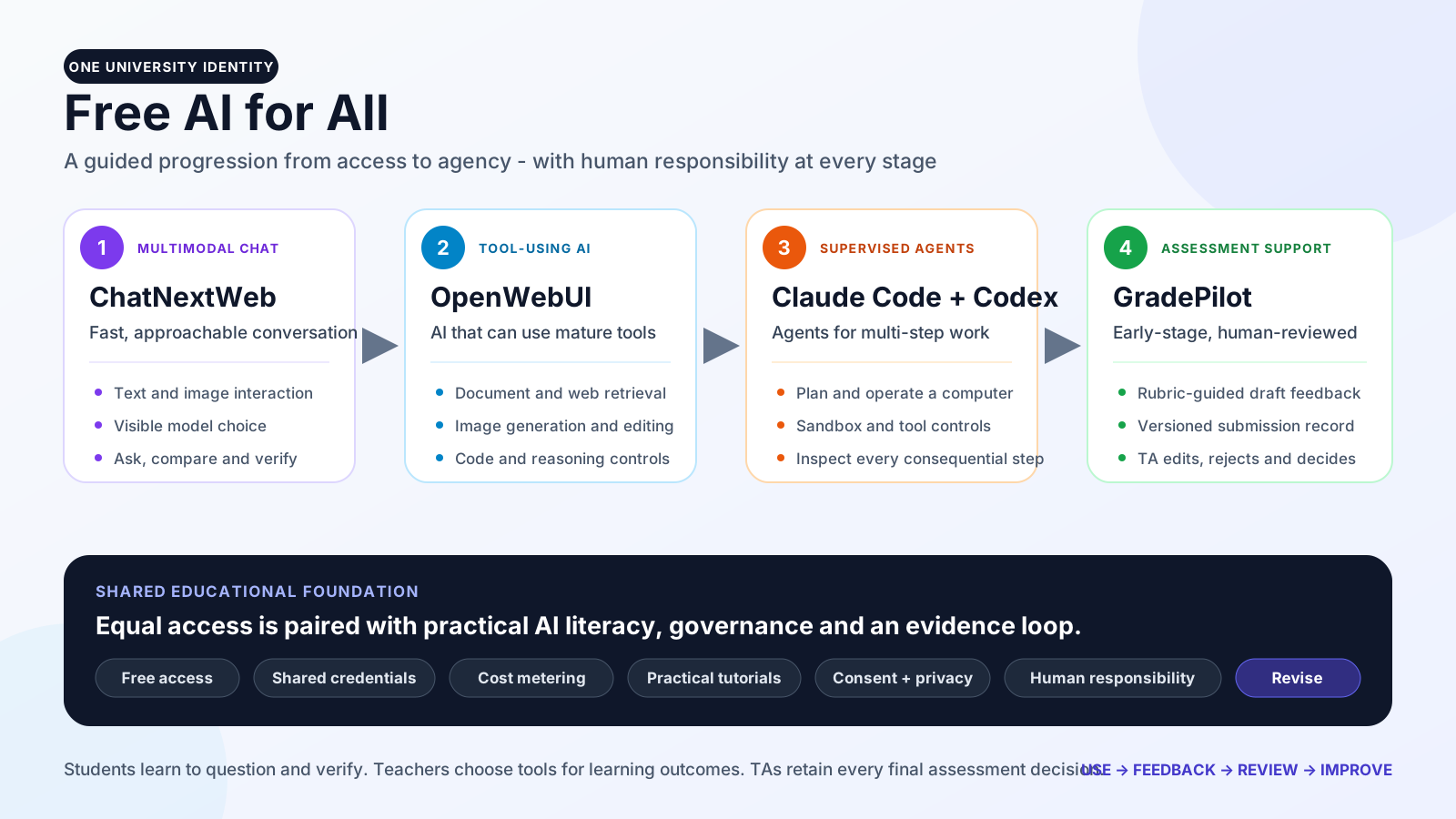
The project does not claim to have created the underlying foundation models. Its original contribution is the educational and technical design around them: free shared access, a coherent capability progression, distinct student, teacher and TA workflows, practical AI literacy, per-user cost metering and an evidence loop that informs the next iteration. This design was necessary because access alone does not teach people how to question outputs, supervise actions or remain accountable for decisions.
1. ChatNextWeb: multimodal AI made approachable
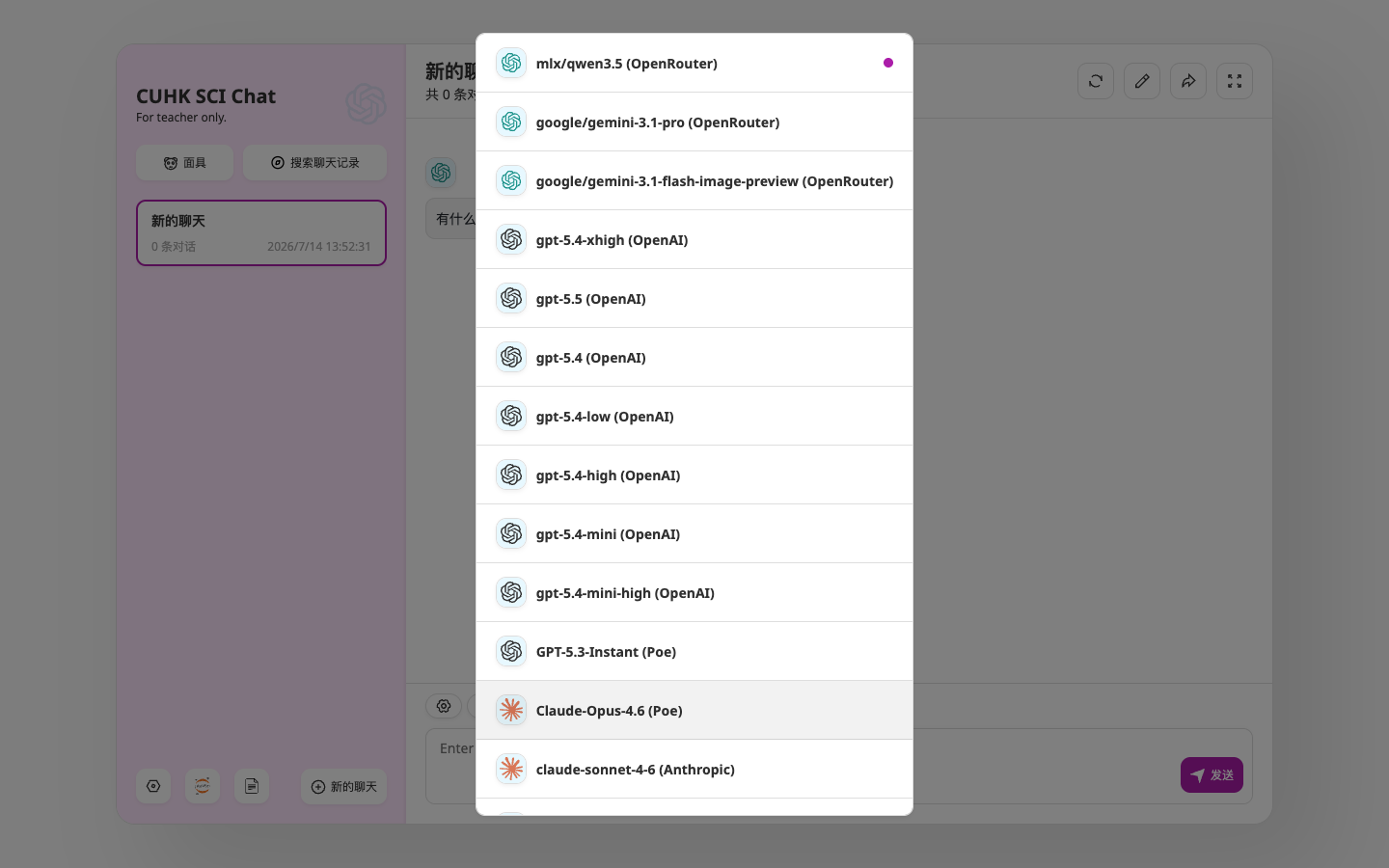
ChatNextWeb provides a familiar entry point for text-and-image conversations. Model choice is visible rather than hidden, allowing students and educators to compare systems, investigate why answers differ and decide when a lower-cost model is sufficient.
2. OpenWebUI: AI that can use tools
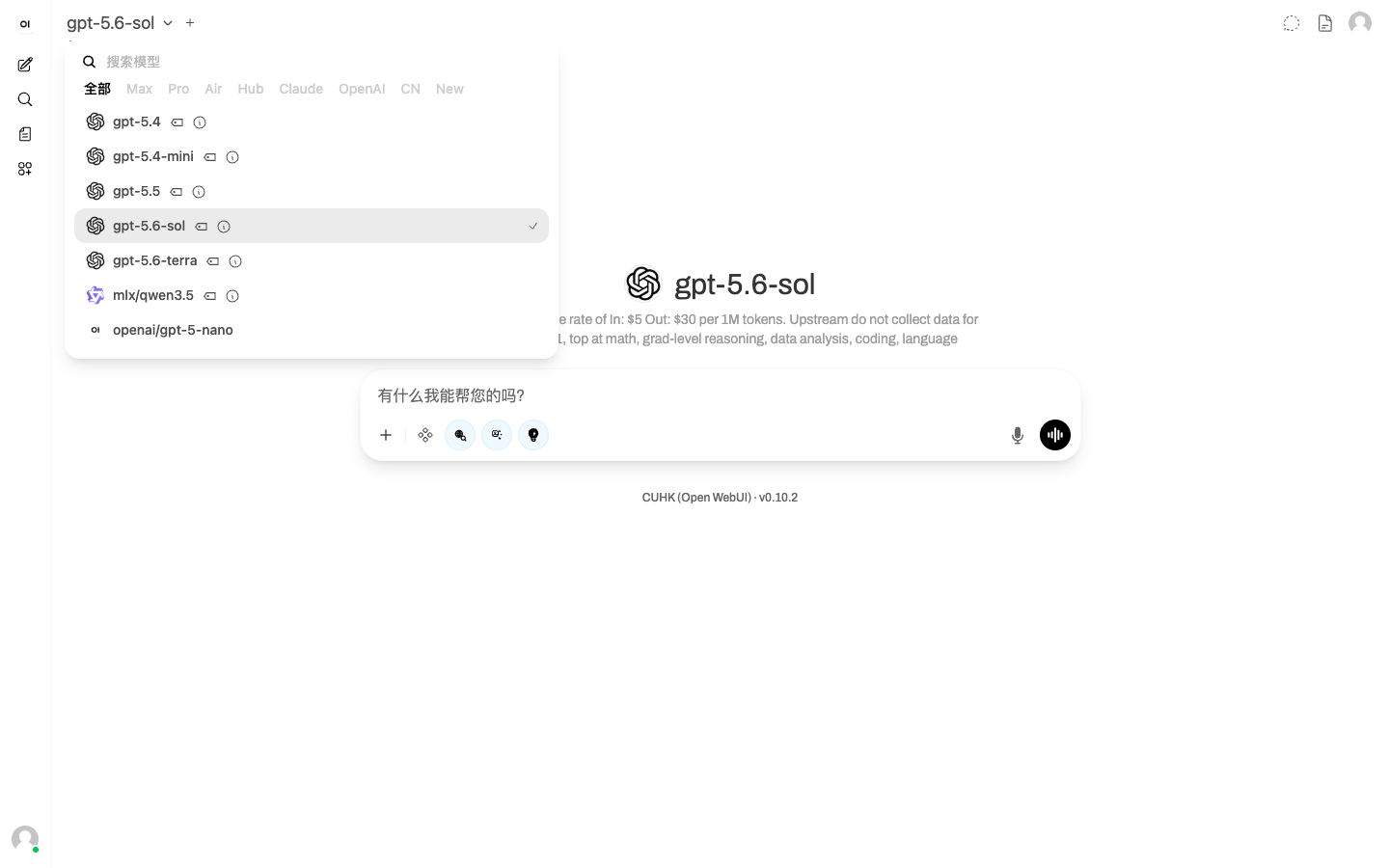
OpenWebUI moves beyond conversation to document retrieval, web-assisted work, image generation and editing, reasoning and in-browser code execution. Its searchable catalogue makes model selection explicit. The customised service also meters each student’s spend against a weekly budget cap, joining equitable access with cost-aware use.
The working environment keeps tool traces and results inspectable. In the example below, native web search finds exact SI values from official sources and Code Interpreter performs the calculation; the source domains, executed step and result remain visible together.
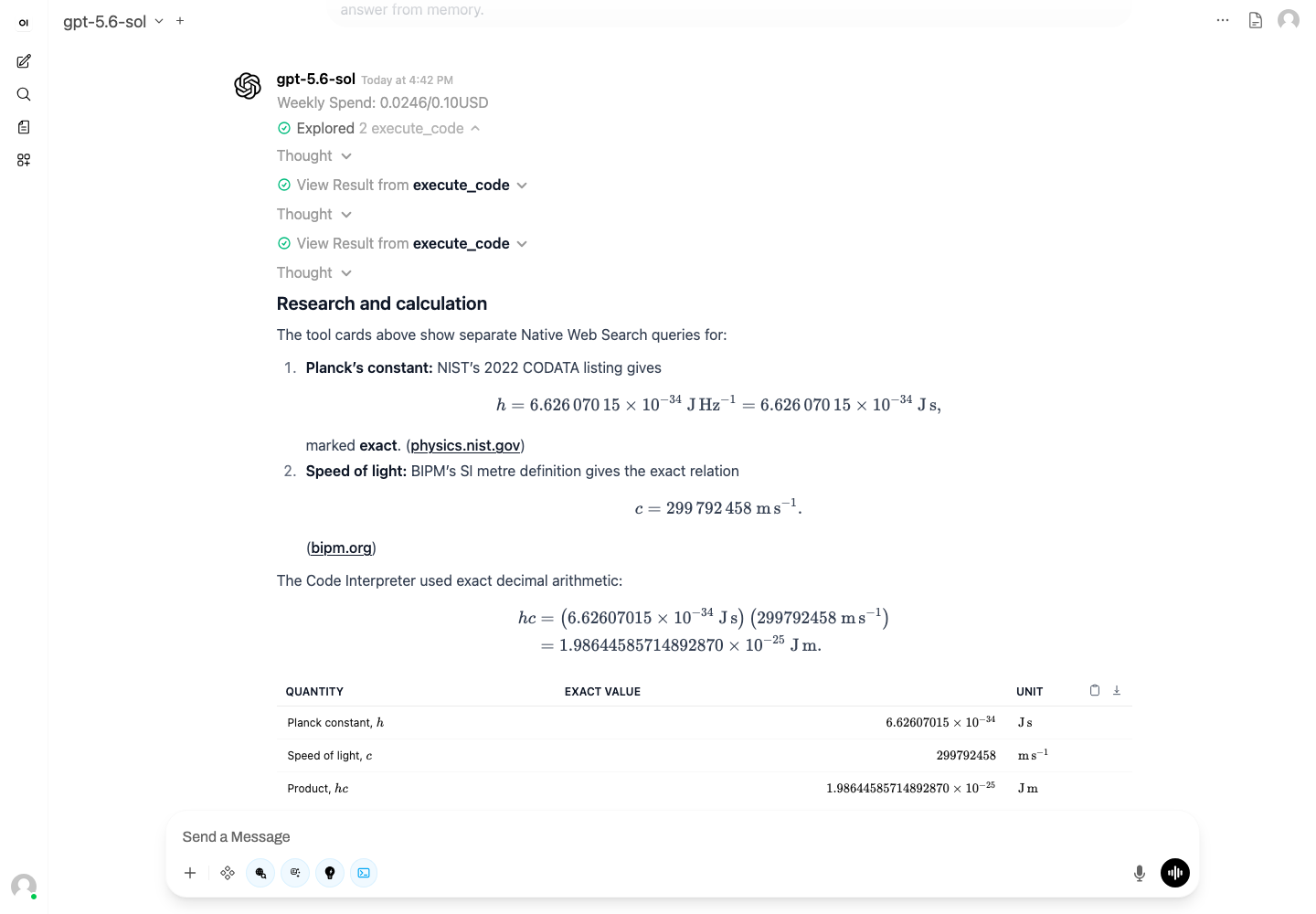
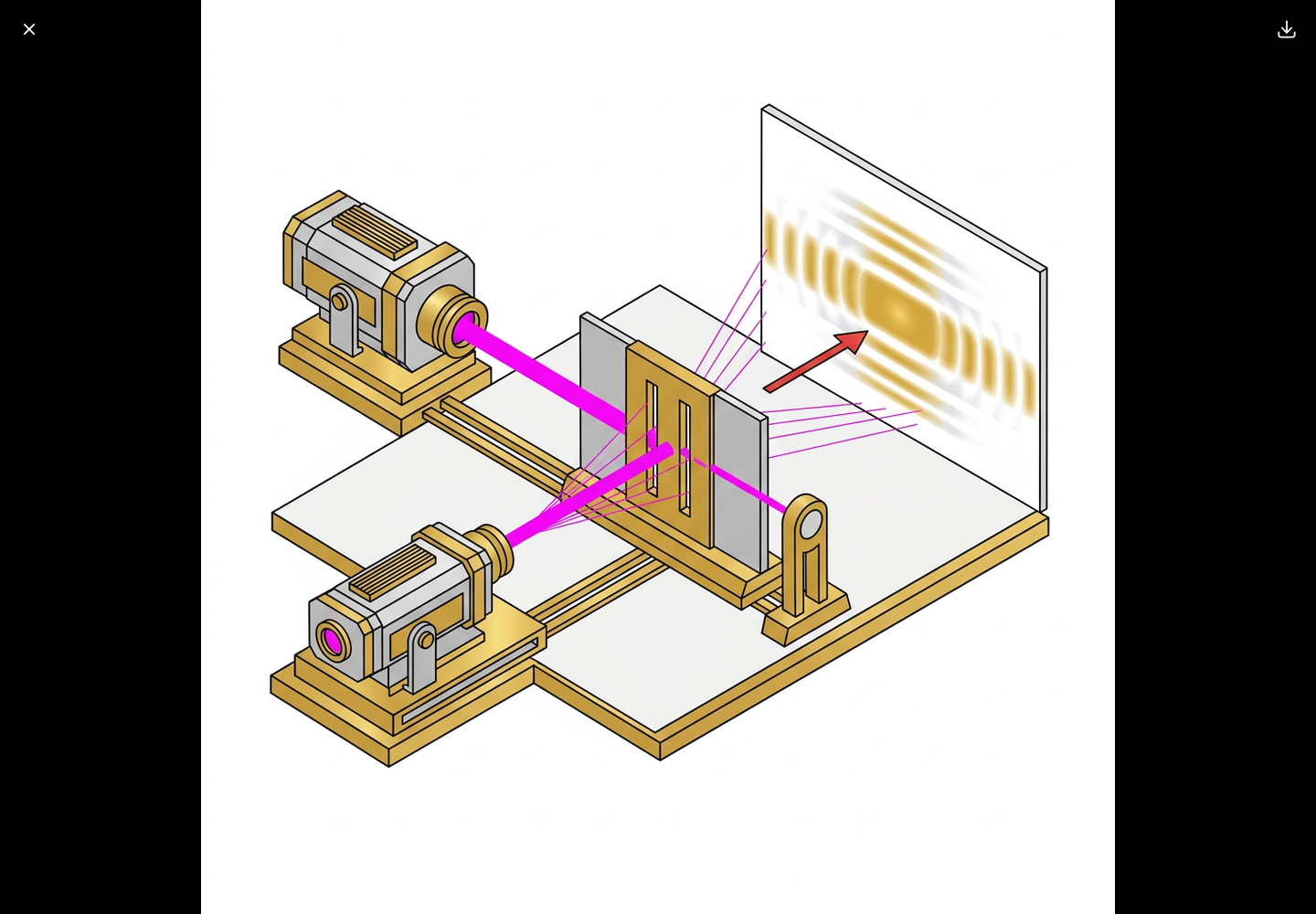
Image generation is also treated as an iterative, reviewable process. The first prompt creates an educational double-slit illustration; the second preserves the apparatus while changing the background, beam colour and annotation.

3. Claude Code and Codex: supervised agents
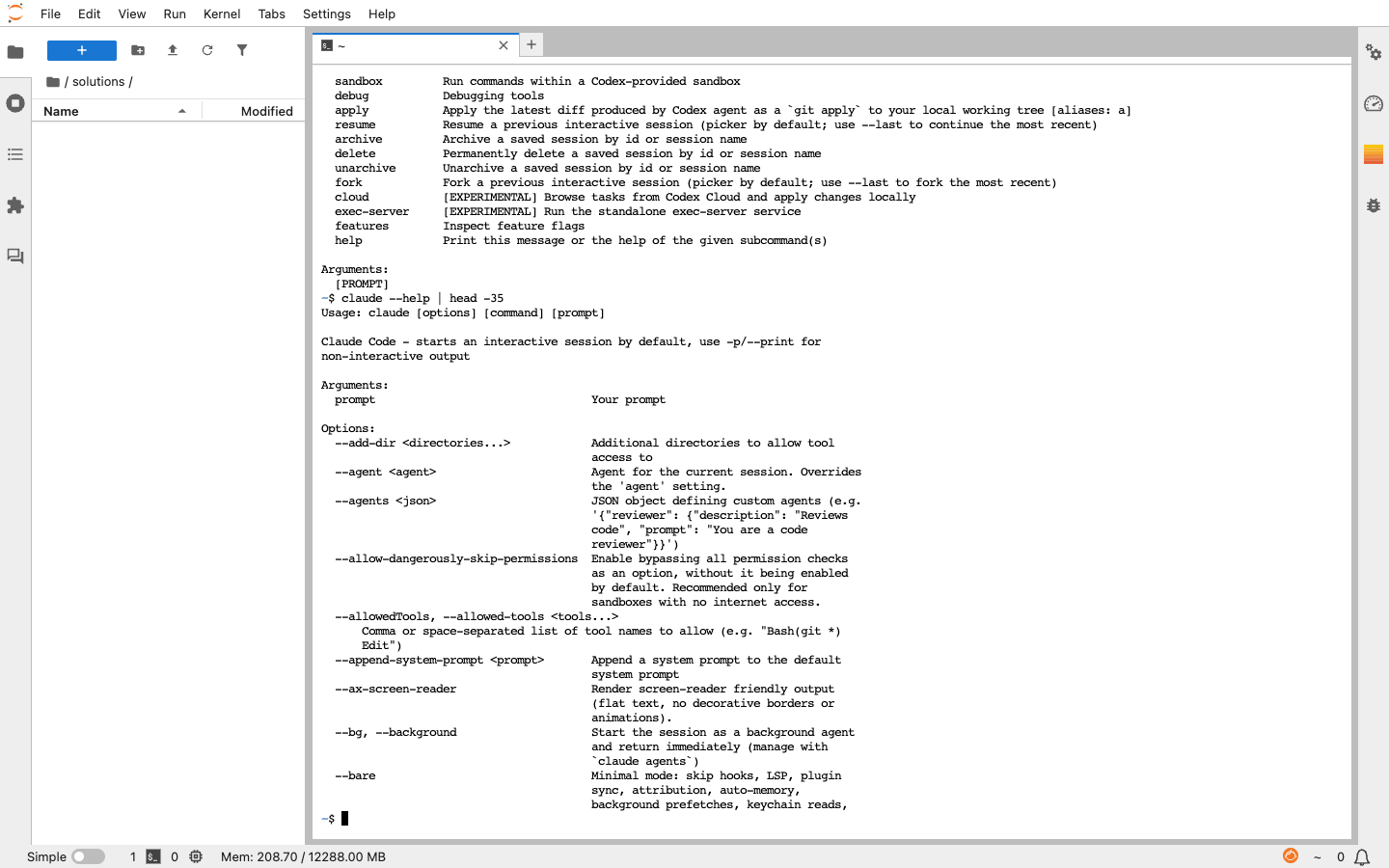
Claude Code and Codex place agents inside an authenticated JupyterLab workspace. Users can inspect files, plans, commands, tests and artifacts while keeping control of what the agent may change. This extends AI literacy from checking an answer to supervising a multi-step process.
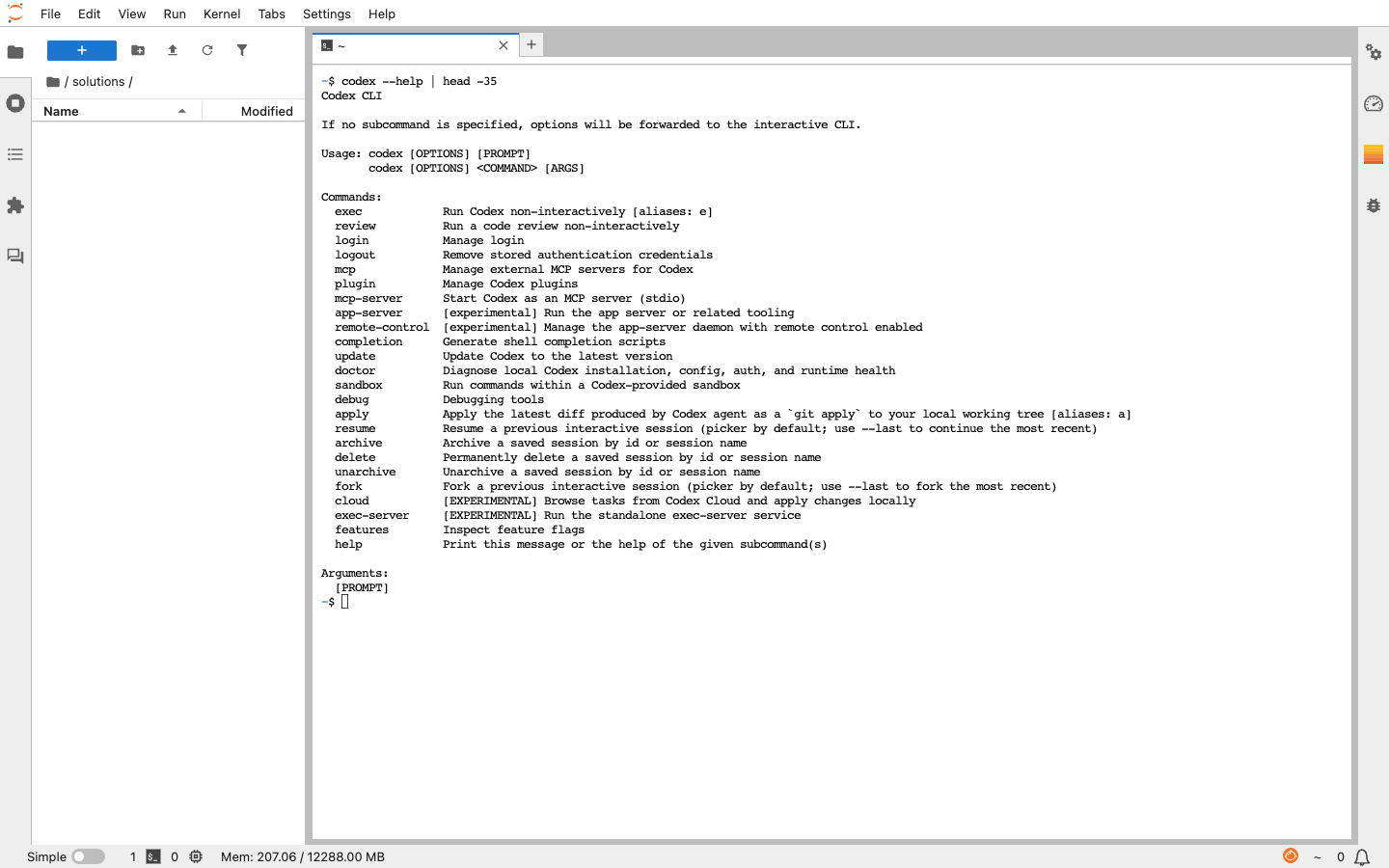
Codex supervised file-and-test demonstration. Codex inspects a plotting script, creates two tests, runs them with visible approval, regenerates a PDF and opens the result from the JupyterLab file browser.
4. GradePilot: assistance without automatic authority
GradePilot connects assignments, submission history, grading and feedback. It is a working early-stage prototype under evaluation. AI Fill is an optional action that can draft rubric-guided scores and feedback, while a separate Save control leaves the teaching assistant responsible for inspecting, editing or rejecting the draft and making every final decision.

How this differs from existing approaches
Most commercial AI products are designed for one individual and one interaction type. This project is designed for an educational community: students, teachers and TAs use the same connected ecosystem but have different responsibilities and learning goals. Free access and cost control address economic inequity; role-specific tutorials and visible tool traces address capability inequity; supervised agent actions and retained TA authority address accountability. The system can adopt new models and interaction modes without abandoning those educational safeguards.
Evidence hub · Innovation · Impact · Depth